
Walk through any established neighborhood these days. Whether it is the sprawling suburbs of Dallas or the tight-knit streets of Southern California, you will notice a shift. It is the sound of hammers swinging in backyards and cement trucks pouring foundations where swing sets used to be. The concept of the “single-family home” is getting a remix. We are not just talking about guest rooms anymore; we are talking about full-blown secondary homes.
This is the world of the ADU. If you are sitting on a piece of property, you are likely sitting on untapped potential. But before you call a contractor, you need to understand exactly what is an ADU and why everyone from city planners to savvy investors is obsessed with them.
Cutting Through the Real Estate Noise: What Does ADU Stand For?
Let us strip away the zoning jargon. What does ADU stand for? It is an Accessory Dwelling Unit.
That is the technical term for the permit. In the real world, you will hear them called granny flats, in-law suites, backyard cottages, or casitas. But the ADU meaning is specific: it is a secondary housing unit on a single-family residential lot that has everything needed to live independently. We are talking about the kitchen, the bathroom, and a place to sleep.
It is not a room rental. It is not a pool house with a mini fridge. To count as ADU real estate, it must be self-sufficient. It shares the dirt with the main house, but it functions on its own terms.
What Is an ADU Home? (And Why It Matters)
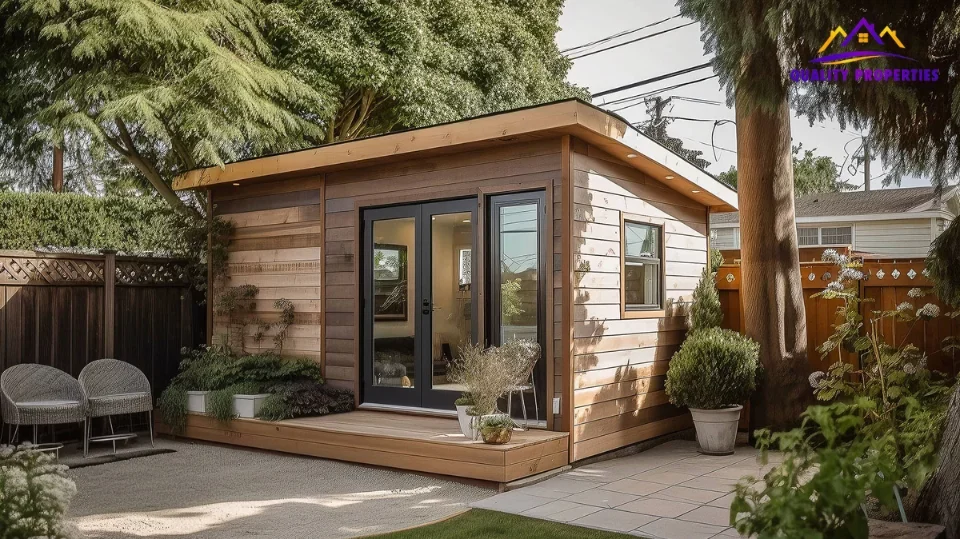
When people ask what is an adu home, they usually imagine a tiny house in the grass. That is one version, but the reality is more flexible.
You typically have three flavors:
- Detached: The classic standalone cottage. These offer the best privacy because you do not share walls. Perfect if you plan to rent a stranger.
- Attached: Think of an addition to the side or rear of your house. It is cheaper to build because you can sometimes tie into existing systems, but you will hear your tenant TV if the soundproofing is not top tier.
- Conversions: This is where things get creative. Garage conversions are massive right now. You take a dusty storage space for old holiday decorations and turn it into a studio apartment.
The benefits of adus in this format? You already have the roof and the walls. You are focusing on the interior build-out, which can speed up the ADU construction timeline significantly.
The Regional Reality Check: Rules Are Everything
Here is where the dream meets the red tape. You cannot talk about this topic without looking at local laws. Real estate is hyper-local.
Take ADU Florida regulations, for example. In Austin, the code has evolved to encourage density, allowing for generous builds. However, drive to a strict HOA-governed subdivision in the suburbs, and you might find covenants that ban secondary structures entirely.
Compare that to the West Coast. If you are looking at the City of Moorpark ADU guidelines, you are dealing with California’s state mandates which override a lot of local restrictions to encourage housing. However, Moorpark still has specific rules on aesthetics. They want the unit to look like it belongs. You cannot just drop a modern shipping container next to a Spanish-style villa and call it a day.
What is a adu home legally allowed to be? That depends entirely on your zip code. Never skip the feasibility study.
Designing for Real Life: Accessory Dwelling Unit Floor Plans
You have limited square footage, often sitting between 400 to 1200 square feet. If you screw up the layout, it feels like a closet. If you nail it, it feels like a penthouse suit.
Great accessory dwelling unit floor plans ignore traditional house rules. You do not need a formal dining room. You need to flow.
- Vaulted Ceilings: If you cannot build out, build up. High ceilings make small footprints feel huge.
- The Kitchenette Dilemma: Do you need a six-burner stove? Probably not. A high-end induction cooktop and convection oven save space and look sleek.
- Indoor-Outdoor Living: Big sliding doors can double your living space visually.
When looking at what is adu in real estate design, the winner is always “multifunctional.” The bedroom might need a built-in desk. The laundry might be tucked into the bathroom cabinetry. Every inch must earn its keep.
The Honest Pros and Cons
Why go through the hassle? The benefits of accessory dwelling units usually outweigh the headaches but let us be real about both.
The Wins:
- Cash Flow: It is an income stream in your backyard. That rent check can cover a huge chunk of your primary mortgage.
- Property Value: Appraisers are starting to give these units the credit they deserve. You are effectively adding a second property to your portfolio without buying new land.
- Flexibility: The “Granny Flat” name exists for a reason. Multigenerational living is back. Maybe it is for your parents now, and for your college-grad kid later. Or maybe you downsize into the ADU and rent out the big house to fund your travel addiction.
The Headaches:
ADU construction is loud, dusty, and expensive. You are becoming a developer. You must deal with utility hookups, sewer lines, and contractors who might ghost you. And once it is built, you are a landlord. If the toilet breaks at midnight, that is your problem. If the tenant plays drums, that is your soundtrack.

Final Verdict
So, what is an ADU really? It is the most versatile tool in a homeowner’s kit. It is a hedge against rising costs and a solution for fragmented families.
Whether you are navigating the specifics of ADU Florida law or trying to interpret the City of Moorpark for ADU architectural standards, the goal is the same: maximizing the utility of the land you own.
The market has shifted. The big, empty backyard is out; the functional, income-generating ADU home is in. It is not just about adding space. It is about adding options to your life.
FAQ’s
What exactly qualifies a structure as an ADU?
To officially count as an ADU, the structure needs to be a self-contained living space located on the same lot as a primary residence. It cannot just be a bedroom; it requires its own kitchen, bathroom, and private entrance. It is fully independent living, just on a smaller scale.
Is there a difference between an ADU and a tiny home?
Yes, and it is a big legal distinction. An ADU is built on a permanent foundation and connected to local utilities like water and sewage. Tiny homes are often built on wheels and are frequently classified as recreational vehicles (RVs) by zoning departments, meaning you cannot always legally live in them full-time on a residential lot.
Does building an ADU actually increase my home’s value?
In almost every market, yes. You are effectively adding livable square footage and a potential income stream to your property. Appraisers and future buyers view that as a major asset, often recovering the construction costs and then some upon resale.
Are the rules for ADUs the same everywhere?
Definitely not. Regulations vary wildly. For instance, ADU Florida laws might have different setback requirements compared to the City of Moorpark ADU guidelines in California. Some cities encourage them with fast-track permits, while others have strict rules about how the unit must look from the street.
Can I build an ADU if I live in an HOA community?
This used to be a hard “no,” but that is changing. Many states have passed laws that prevent HOAs from unreasonably banning ADUs. You will still need to follow their architectural guidelines regarding paint colors and materials, but they often cannot stop you from building the unit entirely. Always read your bylaws first.
