
If you drive through New England, you have seen them. They are houses that look a little lopsided.
From the front, they look normal. But from the side, they look like they are leaning against the wind. The roof is short on one side and slopes all the way down to the ground on the other.
This is the saltbox house. It is one of the most recognizable styles in American history. But it was not built that way just to look cool. It was a practical solution for freezing weather and growing families.
Here is what you need to know about the history, the design, and why people still love the salt box house today.
What Is a Salt Box House?
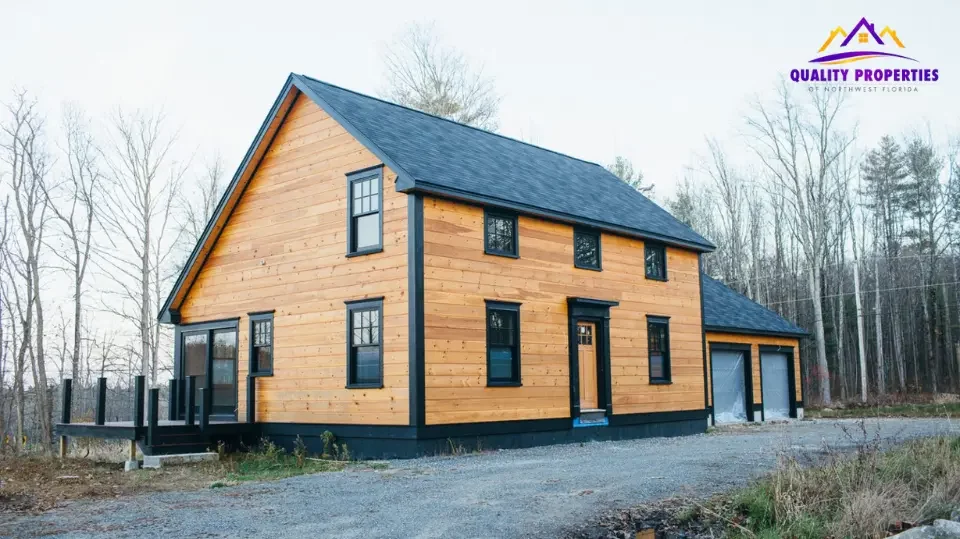
The definition is pretty simple. A saltbox house is a wooden-frame house with two stories on the front and one story in the back.
The most obvious feature is the roof. It is asymmetrical. The front roof is standard, but the back roof is long and low. Builders call this a “catslide” roof.
Why is it called a saltbox? The name is literal. Back in the colonial days, salt was expensive. People used it to cure meat. They stored it in wooden boxes that hung on the wall. These boxes had slanted lids to keep moisture out. The shape of the house looked exactly like those salt boxes. So, the name was stuck.
What Does a Saltbox House Look Like?
If you are trying to spot a saltbox style house, you must look at it from two different angles.
- From the Front: It looks like a standard colonial home. You will see a door right in the center and windows spaced evenly on both sides. It looks symmetrical.
- From the Side: This is the giveaway. You will see that uneven triangular shape. The back roofline creates a long slope that sometimes comes down to just a few feet off the ground.
The History: Why the Weird Shape?
These houses started popping up in New England around the mid-1600s. They stayed popular until the early 1800s. There are two stories about why they were built this way. One is a fun myth, and one is the truth.
The Tax Myth: You might hear that people-built salt box houses to avoid taxes. The legend says Queen Anne put a tax on two-story houses. So, people slanted the roof in the back to claim it was technically a “one-story” house. It is a clever story. But historians have not found much proof that this tax existed or that the roof fooled anyone.
The Real Reason: The “Lean-To”The real story is about space. Early settlers built simple two-story houses. But the families were big back then. They needed more room.
Instead of building a new house, they built an addition on the back of the ground floor. They extended the roof down to cover this new room. This was called “lean-to.” It was the cheapest and easiest way to add a kitchen or pantry.
Eventually, people stopped adding them later. They just started building the house with the lean-to-shaped right from the beginning.
Key Design Features
A true saltbox house has a few specific traits. If you are looking at an old one, here is what you will usually find.
1. The Catslide Roof: The roof pitch is steep. This was not for style. It was for snow. A flat roof in Massachusetts collapsed under heavy snow. The steep slant let the snow slide right off.
2. Big Central Chimney: It gets cold in the Northeast. These houses usually have a massive brick chimney right in the center. This lets them have a fireplace in the front rooms and the back kitchen, all using one chimney stack. The bricks held the heat and kept the house warm at night.
3. Wood Siding: You will not see brick exteriors on these very often. They are always covered in wood clapboards or cedar shingles. Over time, the cedar weathers to that classic silver-gray color you see in old photos.
4. Small Windows: Glass was expensive and hard to get. It also let us heat escape. So, the windows were double hung (they slide up and down) with lots of small panes of glass.
The Layout Inside
The floor plan of a saltbox style house was very predictable. It was built for work, not privacy.
- The Hall: This was the main room. It had the biggest fireplace. The family cooked, ate, and worked here.
- The Parlor: This was on the other side of the front door. It was a bit nicer. Parents often slept here, or it was used for guests.
- The Rear Rooms: The back section (under the long roof) was usually divided into three small rooms. The middle one was the kitchen. The side rooms were pantries or a small bedroom for tending to babies or sick family members.
Why It Worked So Well
The saltbox house was an early example of a smart design. Builders knew how to work with the weather.
They almost always built the house facing south. This let the sunshine into the front windows to warm up the rooms.
The long, sloping roof faced north. In New England, the brutal winter winds come from the north. The wind would hit that low, slanted roof and slide over the house. If it had been a tall, flat wall, the wind would have pounded the house and sucked the heat out.
Pros and Cons of a Saltbox
If you are thinking about buying an antique salt box house or building a new one, there are trade-offs.
| The Good Stuff | The Bad Stuff |
| History: Real wood floors and beams have a feeling you cannot fake. | Low Ceilings: They built ceilings low to keep heat in. It can feel cramped. |
| Durability: Timber frames are incredibly strong. They handle storms well. | Sloped Ceilings: The upstairs rooms in the back have slanted walls. You lose space. |
| Energy: The shape blocks wind and sheds snow perfectly. | Maintenance: Wood siding needs painting or staining often to stop rotting. |
| Space: The footprint is deceptively large because of the back depth. | Closed Layout: It is not an “open concept.” There are a lot of walls and doors. |
The Modern Saltbox
People are still building these today. But the new versions look a little different.
Architects love the saltbox style house because the lines are clean and simple. Modern versions often swap the wood shingles for metal roofs. They might put a huge wall of glass on the back to let light in.
The shape is also perfect for solar panels. That big, south-facing roof slope (if you flip the orientation) is basically a giant platform for solar energy.
Owning a historic home like a Saltbox is a labor of love, but let us be honest, the maintenance can sometimes feel like a full-time job. If you are sitting on a property that needs more repairs than you want to handle, or if you want to sell a house without a realtor, there is an easier way. At Quality Properties of Northwest Florida LLC, we buy homes exactly as they are. You do not need to fix the roof, update the plumbing, or even clean up. Visit us to get a fair cash offer and close on your own timeline.
Final Thoughts
The saltbox house is weird, but it works. It was not designed by an architect who tried to be famous. It was designed by regular people trying to stay warm and make room for their kids.
Whether it is a 300-year-old home in Connecticut or a modern eco-friendly build, the design holds up. It proves that sometimes the simplest answer, like slanting a roof to dodge the wind, is the best one.
FAQ’s
What is a salt box house?
It is a traditional wooden-frame house that originated in New England. It has two stories in the front and one story in the back, giving it a distinctive asymmetrical shape. It was originally designed to make adding extra space easier for growing families.
Why is it called a saltbox house?
The shape of the house looks exactly like the wooden boxes used to store salt in colonial kitchens. Those boxes hung on the wall and had a slanted lid to keep moisture out, just like the roof of the house.
What does a saltbox house look like?
From the front, it looks like a regular, symmetrical colonial home. But from the side, you see a long, sloping roofline that drops down from the second-story peak almost to the ground in the back.
Where are saltbox houses usually found?
They are most common in New England states like Massachusetts, Connecticut, and Rhode Island. You will find many original ones still standing in historic towns, though the style has been copied all over the US.
Are people still building saltbox houses?
Yes. While they are not as common as ranch or colonial homes, modern architects like the shape. The long roof surface is great for solar panels, and the simple lines fit well with modern minimalist designs.
