
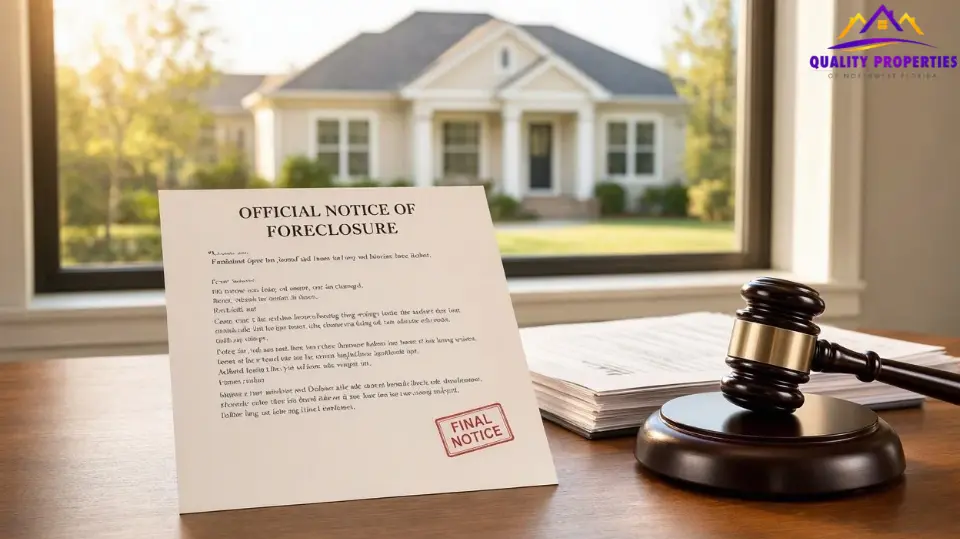
Understanding pre-foreclosure vs foreclosure is critical when missed mortgage payments put your home at risk. While both terms mean a loan is in trouble, they represent two completely different stages of the process.
Pre-foreclosure provides an opportunity for you to save the equity that you have built up so far and preserve your credit score as well. Foreclosure on the contrary, means that the lender will take charge completely and even remove all your right of ownership about the property. The difference between pre-foreclosure and foreclosure will help you to make intelligent decisions before the time is up.
This article will tell you step by step in each of the stages. You will also learn how a time scale works, the reasons your credit score will decrease, the methods involved in selling the house during pre-foreclosure and finally starting anew.
What Is Pre-Foreclosure?
Pre-foreclosure meaning refers to the period between your first missed payment and the final auction date. You still legally own your property during this window.
The phase starts when a homeowner falls behind on monthly bills. Mortgage delinquency triggers warnings from your mortgage lender or servicer. Under federal mortgage rules, lenders must wait 120 days after default before starting court proceedings.
What Is Foreclosure?
Foreclosure meaning refers to the legal process where a lender repossesses a property to satisfy an unpaid mortgage default. Once foreclosure wraps up, you no longer own the property.
The process ends with a public auction or sale. Depending on state laws, this event is called a trustee sale or sheriff sale.

Pre-Foreclosure vs Foreclosure Difference: Key Comparisons
| Feature | Pre-Foreclosure Phase | Foreclosure Phase |
| Legal Homeowner | You keep title ownership | Lender or auction buyer owns it |
| Control of Sale | You choose price and buyer | Lender dictates auction terms |
| Credit Damage | Moderate to severe score dip | Maximum score damage for 7 years |
| Occupancy Status | You live in the home legally | Eviction proceedings begin |
| Resolution Goal | Pay back loan or sell home | Bank recovers unpaid debt |
Pre-Foreclosure vs Foreclosure Timeline

The pre-foreclosure vs foreclosure timeline varies based on regional legal rules. States use either judicial foreclosure or nonjudicial foreclosure systems.
Judicial foreclosure states require court approval, stretching timelines from 180 days to over a year. Nonjudicial foreclosure states use deed power clauses, completing auctions in as little as 90 to 120 days.
According to the ATTOM Mid-Year 2026 U.S. Foreclosure Market Report, nationwide foreclosure filings climbed 21 percent in early 2026, with over 227,000 properties receiving default notices or auction dates.
What Happens During Pre-Foreclosure?
In case you experience mortgage payment default, a series of events takes place that you can expect.
Your mortgage servicer will begin monitoring your delinquent loan account and will mail you letters about possible plans for your repayment or mortgage forbearance.
Once your missed payments reach 90 days, your lender will send you a Notice of Intent to Foreclose letter. It indicates that soon they are going to initiate action.
After 120 days, the lender will submit paperwork in court. For judicial states, this would be a complaint, while for nonjudicial states, it would be a Notice of Default.
What Happens During Foreclosure?
If pre-foreclosure ends without a cure or sale, formal proceedings start.
The lender secures a foreclosure judgment in court or publishes public notice of a scheduled trustee sale. Public auction listings appear online and in local newspapers.
On auction day, the property sells to the highest bidder. If bids fail to cover the debt, the lender takes title ownership, turning the house into an REO property.
After the auction, new owners issue a notice to vacate. If you remain, local law enforcement executes a legal eviction order.
If you are facing foreclosure or need to sell a house fast in pre-foreclosure, working with experienced buyers provides a direct way out. You can get a fair cash offer for pre-foreclosure property without paying repairs or agent fees through Quality Properties of Northwest Florida LLC.
Selling an Underwater House

If you owe more than your fair market value, you face negative equity. Selling an underwater house before foreclosure requires lender short sale authorization.
Cash investors often assist with short sale paperwork to speed up lender approvals.
If high costs or repairs prevent a standard sale, expert help simplifies the transition. To explore cash options that halt auction steps without hassle, contact Quality Properties of Northwest Florida LLC today.
Final Words
Being aware of the difference between pre-foreclosure and foreclosure is a great advantage in the event of mortgage default. The pre-foreclosure stage provides you with an opportunity to take measures to safeguard your credit, repay your debts, and save your equity.
If you wait until foreclosure, you lose all your control over your situation, damage your credit for seven years, and face eviction. Early steps towards loan reinstatement or loss mitigation will ensure that you get out with dignity.
Frequently Asked Questions
What is the main pre-foreclosure vs foreclosure difference?
Pre-foreclosure means you still own the home and can fix or sell it. Foreclosure means the bank has repossessed the property or sold it at auction.
How long does pre-foreclosure take?
Pre-foreclosure usually lasts between 120 days and several months, depending on state laws and lender processes.
Can I sell my house during pre-foreclosure?
Yes. You can sell your home at any point in pre-foreclosure up until the trustee sale or sheriff sale closes.
What happens if my house sells for less than what I owe?
If the sale price does not cover the mortgage arrears and balance, the lender may agree to a short sale or pursue a deficiency judgment for the rest.
What is an REO property?
An REO or Real Estate Owned property is a home that failed to sell at auction and was repossessed by the mortgage lender.
