

If you’re selling your Pensacola house this year, tax season may be closer than you think. If you are selling a house in Pensacola, you will love these tax tips for selling your home. This article is for informational purposes only.
Not All Profits Are Taxable: The Home Sale Tax Exclusion
When selling your Pensacola house, you may be able to exclude a large portion of your profit if certain conditions are met. Typically, you can exclude up to $250,000 of gain from your taxable income, and up to $500,000 if filing a joint return. (If you sell for a loss, you can’t deduct that loss.)
To qualify, you generally need to meet these requirements, as outlined in IRS Topic No. 701 on the sale of your home:
- The home must be your primary residence.
- You must have owned and lived in it for at least two of the past five years.
- You haven’t used the exclusion on another home sale in the past two years.
It is also important to update your address with the IRS whenever you move.
Other Exclusions: Partial Tax Break if You Don’t Meet the Two-Year Rule
If you do not meet the requirements above, you might still be able to exclude a portion of your profit from income tax. There are several special conditions that can qualify you for a prorated, tax-free gain. If you need to sell because of a change in health, a job change or other unforeseen circumstances, you may be able to exclude part of the profit.
Reporting the Sale: Form 1099-S and the IRS
You will need to report the sale if you receive a 1099-S form from the closing agent. This form provides the IRS with information about the proceeds from real estate transactions.
To avoid reporting, make sure you can exclude all of your profit, and let the agent know at closing that the form will not be needed. If the form is issued anyway, you will still need to report it to the IRS, even if no money is owed.
Capital Gains Tax on Investment Properties and Short-Term Ownership
If you are selling an investment property or a house you have only owned briefly, you will likely be subject to capital gains tax. How much you pay depends on your income:
- Lower incomes: you may pay no capital gains tax at all. For 2026, the 0% rate applies up to roughly $49,450 of taxable income for single filers and $98,900 for joint filers.
- Higher tax brackets: long-term gains can be taxed at up to 20%.
- Short-term assets (owned one year or less) are typically taxed the same as ordinary income.
The IRS explains these rules in Topic No. 409 on capital gains and losses. Florida also has no state income tax, which is good news for Pensacola sellers.
First-Time Homebuyer Credit Repayment Rules
Depending on the dates you bought and sold, you might have to pay back all or part of the credit you received. Typically, if you move within 36 months of purchasing the home, the credit must be paid back when the home is sold. Special rules apply and can be found in IRS Publication 523.
Deductible Selling Costs That Lower Your Taxable Gain
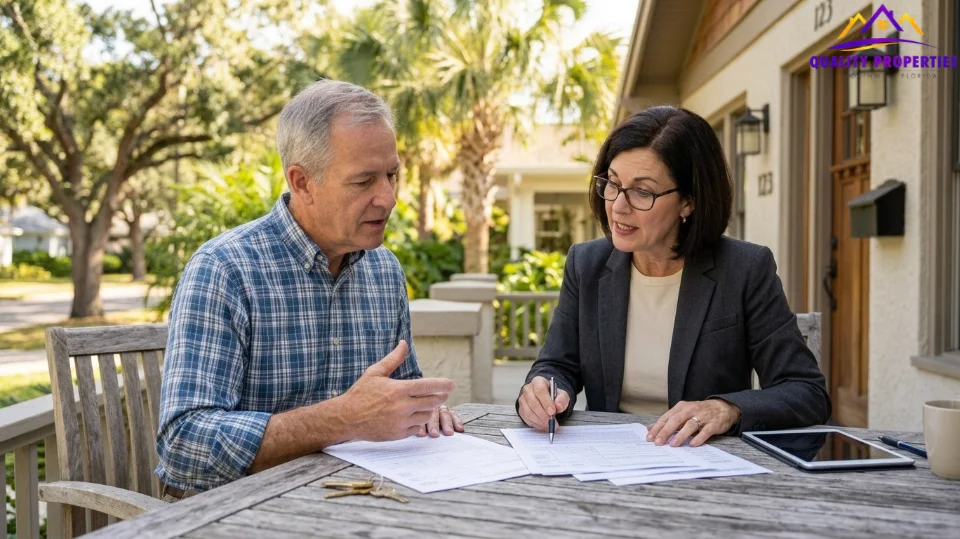
When selling your Pensacola house, reasonable selling costs can reduce your taxable profit. These typically include:
- Closing costs
- Agent fees and commissions
- Marketing costs
- Assessments
- Certain improvements made in order to sell the house (see home fixes worth completing before selling)
Keep track of every cent you spend in an effort to sell your home. Come tax time, this can add up to major savings.
No matter what time of year you sell, it is always important to seek the counsel of professionals. Consult your agent, accountant and attorney to make sure you have set up the best terms for yourself.
Conclusion
Most Pensacola homeowners can keep much, or all, of their profit tax-free if the home was their primary residence for at least two of the last five years. If you don’t qualify, you may still get a partial exclusion, and your selling costs can reduce any taxable gain. Remember to check whether you will receive a 1099-S, and keep good records of every expense.
If you’d rather skip the listing process and the extra costs that come with it, you can also sell your Pensacola house as-is for cash. Either way, talk with a tax professional before closing.
Frequently Asked Questions
Do I have to pay taxes when I sell my house in Pensacola, Florida?
Not always. Florida has no state income tax, and the federal home sale exclusion covers up to 250,000ofgain(500,000 for joint filers) if the home was your primary residence for at least two of the last five years.
How long do I have to live in my house to avoid capital gains tax?
You must have owned and lived in the home as your main residence for at least two of the five years before the sale. The two years don’t need to be consecutive.
Can I deduct closing costs and agent fees when I sell my home?
Selling costs such as agent commissions, closing costs and marketing expenses generally reduce your taxable gain. Keep receipts and ask your tax professional how to apply them.
What is Form 1099-S, and will I receive one?
Form 1099-S reports real estate sale proceeds to the IRS. The closing agent may issue it unless you certify that your entire gain is excludable. If you receive one, you must report the sale even if you owe nothing.
What happens if I sell my Pensacola house at a loss?
A loss on the sale of your personal residence is generally not tax-deductible. Losses on investment or rental property are treated differently, so check with a tax professional.
