

Selling your house in Florida involves more than choosing the right asking price. The time of year you list your property can influence buyer interest, competition, marketing time, and ultimately how much money you receive from the sale.
Many Florida homeowners ask two important questions: What is the worst month to sell a house in Florida, and when is the best time to sell?
The answer depends on your local housing market, the condition of your property, and your financial situation.
In many Florida markets, late summer and early fall can present challenges for home sellers, particularly as the school year begins and hurricane-season uncertainty increases. September and October are often worth examining carefully, although neither month is universally the worst across the state.
Spring, especially March through May, has historically offered favorable selling conditions in many Florida markets. In 2026, research highlighted early to mid-April as a particularly favorable listing period in several major Florida cities.
However, Florida’s real estate market is not the same everywhere. A beachfront condominium in Miami, a retirement property in Naples, and a single-family house in Pensacola may experience different seasonal buying patterns.
Let’s find out how to pick the perfect time to sell your Florida property.
What Is the Worst Month to Sell a House in Florida?
September and October can be challenging months to sell a house in Florida, but there is no single worst month that applies to every Florida housing market.
Several seasonal conditions can make early fall more difficult for certain sellers.
First, September falls near the historical peak of Atlantic hurricane activity. Storm warnings, property damage, inspection delays, and insurance-related concerns can complicate real estate transactions.
Second, the beginning of the school year can reduce the urgency of some family buyers who had planned to relocate before classes began.
Finally, sellers entering the market during a period of elevated housing inventory may face stronger competition from other listings.
However, these factors do not mean homes cannot sell successfully in September or October. A competitively priced property in a desirable neighborhood may attract serious buyers regardless of the month.
Explore Your Cash Home Selling Options
We buy houses in ANY CONDITION in Florida. There are no commissions or fees and no obligation whatsoever. Contact Quality Properties of Northwest Florida LLC
Why September Can Be a Difficult Month to Sell
September deserves particular attention because of Florida’s hurricane exposure.
According to the National Hurricane Center’s historical climatology, the Atlantic hurricane season officially runs from June 1 through November 30, with the historical peak occurring around September 10.
During periods of active storm threats, some transactions may experience delays involving:
- Home inspections and appraisals
- Insurance binding or coverage verification
- Property repairs following storm damage
- Buyer travel and property showings
- Lender and closing requirements
These disruptions can affect individual transactions, but hurricane activity alone does not prove that September consistently produces Florida’s lowest selling prices.
Is October a Bad Month to Sell a House?
October can also be challenging, especially in markets with substantial competing inventory or slowing buyer activity.
Some sellers may need to adjust their asking prices or offer concessions if their homes have been listed for several weeks without attracting qualified offers.
However, October can still attract motivated buyers who want to complete a purchase before the year ends.
In communities with year-round demand, employment-related relocations, or active retirement buyers, October may be a perfectly reasonable time to sell.
The takeaway: Instead of assuming September or October will produce the worst results, compare recent local sales, active listings, average marketing times, and sale-to-list price ratios before choosing your listing date.
What Is the Best Time to Sell a House in Florida?
For many Florida homeowners, spring is one of the most favorable times to sell, particularly from March through May.
During this period, buyer interest can increase as families plan moves, seasonal residents explore properties, and more buyers begin their annual home searches.
Research published by Florida Realtors in April 2026 highlighted favorable spring selling conditions across several Florida markets.
The analysis, based on Realtor.com’s seasonal research, identified early to mid-April as an attractive listing window in several metropolitan areas.
However, it also emphasized that the ideal timing varies by region.
Why Spring Is Often a Good Time to Sell
Spring can offer several advantages for homeowners preparing to list their properties.
Increased buyer interest: More buyers may actively search for properties as they prepare for summer moves or evaluate relocation plans.
Seasonal presentation: Longer daylight hours and favorable weather can make outdoor spaces, landscaping, and property photography more appealing.
Family relocation planning: Some buyers want to complete transactions before the next school year begins.
Potentially favorable marketing conditions: Depending on the local market, sellers may benefit from stronger demand relative to available listings.
These advantages are not guaranteed. If many homeowners list properties simultaneously, increased competition can offset some of the benefits of greater buyer activity.
Is March, April, or May the Best Month to Sell?
Each month offers different considerations.
- March can be attractive for sellers who want to reach buyers entering the spring market before the greatest concentration of competing listings appears.
- April often provides a strong combination of seasonal buyer interest, marketing activity, and property presentation.
- May can remain attractive to buyers planning summer moves, although additional listings may increase competition in some neighborhoods.
For 2026, Realtor.com’s national analysis identified April 12–18 as its best projected listing week nationwide.
That ranking incorporated multiple measures, including expected buyer demand, listing prices, marketing time, competition, and price reductions.
It was a seasonal forecast, not a guarantee of higher completed sale prices.
For individual Florida sellers, the best month still depends on local supply, property condition, pricing, and financial circumstances.

Best vs. Worst Months to Sell a House in Florida: Seasonal Comparison
Florida’s real estate market operates throughout the year, but seasonal changes influence the kinds of buyers searching for property and the competition sellers encounter.
The following table summarizes the main considerations.
| Season | Months | Potential advantages | Potential challenges |
|---|---|---|---|
| Winter | December–February | Seasonal residents, retirees, and second-home buyers | Holiday schedules and differences between local markets |
| Spring | March–May | Strong seasonal search interest and family relocation activity | More sellers may enter the market |
| Summer | June–August | Buyers planning moves before school begins | Heat, heavy rain, vacations, and hurricane season |
| Fall | September–November | Motivated year-end buyers and potentially less listing competition | Hurricane uncertainty and slower family relocation demand |
Important: This is a qualitative seasonal comparison, not a ranking based on monthly Florida sale-price statistics.
What Does This Comparison Mean for Homeowners?
If your main goal is maximizing the selling price, investigate whether your local market historically experiences stronger buyer competition during spring.
If you need to sell quickly, your financial deadline may matter more than waiting for a particular month.
For example, a homeowner carrying an expensive vacant property may spend thousands of dollars on insurance, taxes, utilities, and maintenance while waiting for a potentially better selling season.
A slightly higher future selling price may not compensate for those additional expenses.
The most useful strategy is to evaluate both seasonal market conditions and your own cost of waiting.
Does the Best Time to Sell a House Vary Across Florida Cities?
Yes. Florida includes very different real estate markets, and seasonal patterns can vary significantly by location.
The best month to sell a house in Pensacola may not be the same as the best month to sell a condominium in Miami.
Factors such as tourism, military relocation, employment growth, retirement migration, and the mix of primary residences versus vacation properties can affect local demand.
Best Time to Sell a House in Miami and South Florida
South Florida attracts year-round residents, international buyers, retirees, and second-home purchasers.
Winter visitors can contribute to buyer activity, particularly in certain condominium and luxury-property markets.
However, the best listing period depends on the property type and local inventory.
Florida Realtors’ 2026 seasonal analysis indicated that Miami’s favorable listing window generally arrived later in spring than those of some Central and North Florida markets.
Sellers should review current neighborhood-level inventory, buyer activity, and recent comparable sales rather than relying solely on statewide seasonal trends.
Best Time to Sell a House in Orlando, Florida
Orlando’s housing market includes established residents, relocating households, investors, and buyers interested in properties near major employment centers.
Early to mid-April was identified as a favorable seasonal listing period in the 2026 research highlighted by Florida Realtors.
However, the ideal timing can differ between owner-occupied single-family homes, investment properties, and vacation-oriented housing.
Best Time to Sell a House in Tampa, Florida
Tampa-area homeowners can experience spring buyer activity associated with relocation, changing housing needs, and broader metropolitan demand.
In 2026, seasonal research identified mid-April as a particularly favorable period in the Tampa market.
Still, sellers should consider competition from new listings, property insurance costs, and the number of similar homes available in their immediate neighborhoods.
Best Time to Sell a House in Jacksonville, Florida
Jacksonville’s market is influenced by military households, major employers, local families, and people relocating from other states.
According to Florida Realtors’ 2026 analysis, Jacksonville’s favorable seasonal window began around late March, earlier than some other Florida metros.
For sellers with flexible timelines, preparing a property before the spring buying season may help capture early buyer attention.
Best Time to Sell a House in Pensacola and Northwest Florida
For homeowners in Pensacola, Pace, Milton, Gulf Breeze, Navarre, and other Northwest Florida communities, local conditions deserve particular attention.
The region serves a mix of military families, permanent residents, retirees, and buyers interested in coastal living.
Military relocation schedules can create housing needs that do not fit neatly into traditional spring selling patterns.
Similarly, waterfront and vacation-oriented properties may attract a different buyer audience from inland single-family homes.
For a Pensacola homeowner, the best selling time may depend on:
- Whether the property appeals primarily to local families, military buyers, or seasonal residents
- The number of comparable houses currently listed nearby
- Local insurance and property-condition considerations
- Recent selling prices and marketing times
- Whether the homeowner needs to relocate on a specific schedule
Instead of choosing a month based only on statewide averages, compare recent transactions in the property’s actual neighborhood.
Quality Properties of Northwest Florida LLC works with homeowners exploring direct cash-selling options in the region, including those who may not want to wait for a traditional seasonal listing window.

Florida Housing Market Trends in 2026: What the Latest Data Shows
Seasonal selling patterns are useful, but current market conditions should also influence your decision.
According to Florida Realtors’ September 2026 housing market report, the state’s residential real estate market showed relative stability during the third quarter, although sales momentum remained uneven.
Florida Housing Market Snapshot — September 2026
| Market indicator | Reported figure |
|---|---|
| Existing single-family home sales | 20,537 |
| Year-over-year change in single-family sales | −3.5% |
| Median single-family sale price | $415,000 |
| Year-over-year change in median single-family price | +1.2% |
| Single-family housing supply | 4.4 months |
| Existing condo-townhouse sales | 7,179 |
Source: Florida Realtors, September 2026 statewide housing report.
These figures help illustrate why sellers should not assume that the entire Florida market follows one seasonal pattern.
Although existing single-family sales decreased compared with September 2025, median single-family sale prices increased slightly year over year.
That distinction matters because fewer transactions do not automatically mean every property is losing value.
A property’s selling prospects depend on its price range, condition, location, and competition.
What Do These Numbers Mean for Sellers?
First, buyers may have more choices in markets where inventory remains elevated.
Second, pricing a property above recent comparable sales can make it harder to compete.
Third, well-presented homes in desirable locations may still attract offers even when statewide sales activity is slower.
Finally, the local market matters more than statewide averages when deciding whether to list now or wait.
For current and historical data, homeowners can consult Florida Realtors’ official market reports.
How Long Does It Take to Sell a House During Florida’s Slowest Months?
The amount of time needed to sell a Florida home depends on several factors, including location, asking price, property condition, inventory, and buyer financing.
It is also important to distinguish time to contract from time to closing.
Time to contract measures how long a property remains on the market before the seller signs an accepted purchase agreement.
Time to closing includes additional steps such as inspections, appraisal, lender underwriting, title work, and settlement.
For example, Florida Realtors reported that the statewide median time to contract for existing single-family homes was approximately 47 days in September 2026, compared with 44 days in August.
That means the median marketing period increased by approximately three days in this particular month-to-month comparison.
However, these figures should not be interpreted as proof that September is always the slowest month.
Some properties can receive offers within days, while others may remain available for several months.
What Makes a House Stay on the Market Longer?
Several factors can lengthen the selling process.
- Overpricing: A house priced well above similar nearby properties may receive fewer showings and offers.
- Property condition: Homes requiring substantial repairs may attract a smaller pool of buyers, particularly when conventional financing presents challenges.
- High inventory: More competing properties can give purchasers additional negotiating leverage.
- Insurance and inspection concerns: Buyers may require additional time to evaluate roof condition, storm damage, flood exposure, or insurance requirements.
- Limited marketing exposure: Poor listing photography, incomplete information, or restricted showing availability can reduce buyer interest.
The key is to evaluate why a property is not attracting offers rather than assuming the month alone is responsible.
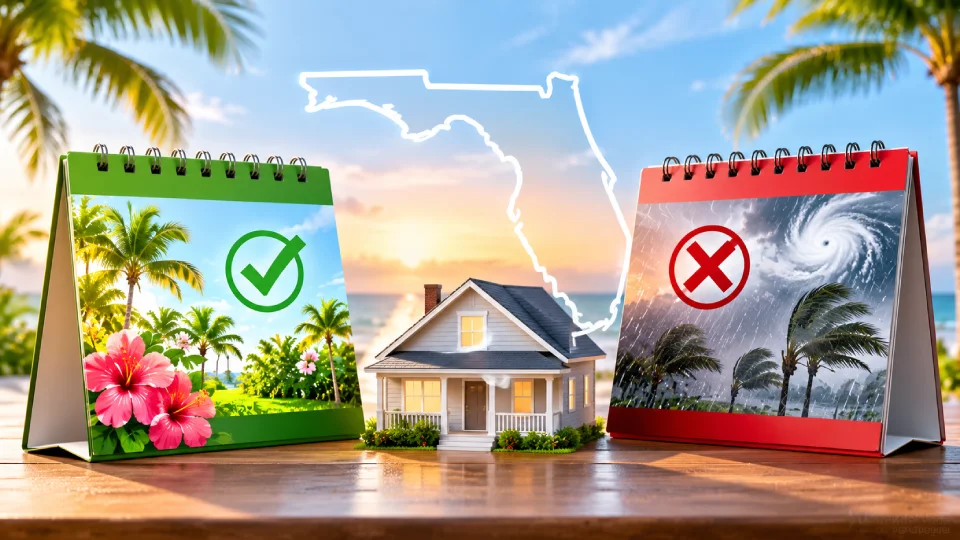
Should You Wait Until Spring or Sell Your Florida House Now?
Waiting until spring may make sense when you have a well-maintained home, manageable ownership expenses, and sufficient time to prepare for traditional marketing.
However, waiting can also become expensive.
If you’re paying a mortgage, property taxes, insurance, utilities, and maintenance on a home you no longer need, those expenses may reduce the financial benefit of waiting for a potentially stronger selling season.
Example: The Cost of Waiting Four Months
Imagine you own a vacant Florida property with the following monthly expenses.
| Expense | Monthly cost |
|---|---|
| Mortgage interest and other nonprincipal ownership costs | $900 |
| Property insurance | $350 |
| Property taxes | $300 |
| Utilities and maintenance | $250 |
| Total estimated monthly carrying cost | $1,800 |
Waiting four additional months could create approximately $7,200 in carrying costs.
This is a hypothetical illustration, not a typical Florida ownership-cost estimate. Mortgage principal repayment is excluded because it reduces your outstanding loan balance.
Suppose waiting until spring could increase your net sale proceeds by $5,000 before additional carrying costs.
In this scenario, the $7,200 in additional expenses would outweigh that projected increase.
Of course, the opposite is also possible. A larger increase in selling proceeds could justify waiting.
When Waiting Until Spring May Be Worthwhile
Consider waiting when:
- Your property is in good condition and needs little preparation.
- You have sufficient savings to maintain the house comfortably.
- Your local market has historically shown meaningful spring demand.
- You want additional time to explore traditional selling options.
When Selling Now May Make More Sense
Selling sooner may be worth evaluating if:
- The house is vacant and accumulating expenses.
- You’re relocating for work or military service.
- The property requires major repairs you cannot afford.
- You’re managing an unwanted inherited house.
- You no longer want the responsibilities of a rental property.
- You’re facing financial hardship or another time-sensitive situation.
The best selling date is not necessarily the month with the highest historical prices. It’s the timing that creates the strongest overall financial and practical outcome for your situation.

How to Sell Your Florida House During the Worst Selling Months
Even if you need to sell during a slower season, there are several ways to improve your chances of attracting serious buyers.
1. Price Your Home According to Current Market Conditions
One of the biggest mistakes sellers make is relying on outdated comparable sales or prices from unusually competitive market periods.
Review recently sold homes and active listings in your neighborhood.
Consider square footage, property condition, lot size, insurance-related issues, and major differences in features.
If your home has been listed without meaningful buyer activity, reassess the price and marketing strategy using current evidence.
2. Address the Most Important Property Issues
You may not need a major renovation to attract buyers.
However, practical improvements such as cleaning, removing clutter, maintaining landscaping, and addressing obvious safety concerns can help the property present better.
In Florida, buyers may also focus on roof age, air conditioning, water intrusion, storm-related damage, and insurability.
Ask qualified professionals about material defects before deciding which repairs are worth completing.
3. Make Showings Convenient
During a slower market, accessibility matters.
Provide reasonable showing opportunities, keep the home clean, and make sure potential buyers can access accurate property information.
Professional photographs and clear listing descriptions can help buyers understand the property’s features before scheduling a visit.
4. Understand Your Local Competition
Look beyond the number of houses for sale.
Consider how long competing listings have been available, whether sellers have reduced asking prices, and which homes are attracting offers.
A qualified local real estate agent can help compare active inventory with recent closed transactions.
5. Consider Selling Your House As-Is
If your home needs substantial repairs, completing renovations may not be financially practical.
An as-is listing can attract buyers willing to undertake improvements, although buyers may still request inspections or negotiate based on property condition.
Some direct cash investors also purchase homes without requiring the seller to complete major repairs.
Compare expected net proceeds from each option before deciding.
6. Explore a Direct Cash Offer
A direct cash sale can provide another option when you want to avoid extended marketing, repeated showings, or buyer mortgage underwriting.
Cash buyers may be interested in homes that need repairs, inherited properties, vacant houses, and unwanted rentals.
However, investor offers may be lower than prices available through traditional marketing.
Before accepting an offer, verify the buyer’s funds, understand any fees or inspection contingencies, and review the closing terms.
Can You Sell a House Fast During Florida’s Worst Selling Months?
Yes. A property can sell quickly in Florida during any month if the price, condition, and buyer demand align.
A traditionally listed home may attract an immediate offer when it is competitively priced. Conversely, even a cash purchase can face delays involving title issues, liens, or other transaction requirements.
If you need to sell during September, October, or another slower period, start by determining your most important goal.
Is it maximizing the sale price, avoiding repairs, eliminating carrying costs, or closing before a specific deadline?
The answer helps determine whether a traditional listing or a direct sale deserves closer consideration.
Sell Your Florida House Without Waiting for the Next Selling Season
If you own a property in Pensacola or the surrounding Northwest Florida area and prefer to explore a direct sale, Quality Properties of Northwest Florida LLC can help you evaluate a cash-selling option.
Whether your house needs repairs, has been sitting vacant, or no longer fits your plans, requesting an offer can provide another figure to compare with traditional selling estimates.
You can then decide whether convenience and timing justify any difference in expected proceeds.
Ready to Explore Selling Your Florida House?
We buy houses in ANY CONDITION in Florida. There are no commissions or fees and no obligation whatsoever. Contact Quality Properties of Northwest Florida LLC
Final Words
So, when not to sell a house in Florida? The evidence points to the late summer and early fall. The months of September and October often present the biggest challenges for sellers. The combination of hurricane threats, a new school year, and the end of the vacation season makes the market slow down. This is clearly the worst month to sell a house.
The best month to sell a house is usually in the spring. March, April, and May offer a frenzy of activity. Winter can also be a surprisingly strong season thanks to snowbirds. Understanding these seasonal housing market Florida trends is the first step to a successful sale. Plan ahead, prepare your home, and price it right. By knowing the worst months to sell a house, you can avoid them. This will give you the best chance of getting the price you deserve.
If you want to avoid the uncertainty of the open market, there are other choices. For a stress-free sale without any showings or repairs, Quality Properties of Northwest Florida LLC provides fair cash offers. It is a way to sell on your own timeline, no matter the season.
Frequently Asked Questions
What Is the Hardest Month to Sell a House in Florida?
September and October may be difficult in certain Florida markets because of hurricane-season uncertainty and changes in seasonal buyer activity. However, no single month is consistently the hardest across every Florida community. Local inventory, pricing, property type, and buyer demand are more reliable guides.
What Are the Worst Months to Sell a House?
Across many U.S. markets, late fall and winter may see slower activity. Florida differs because seasonal residents, retirees, and second-home buyers can support demand during winter. The worst months depend on the specific city and property type.
What Is the Best Time of Year to Sell a Home in Florida?
Spring, especially March through May, has historically offered favorable conditions in many Florida markets. For 2026, seasonal research identified early to mid-April as a particularly favorable listing window in several major Florida metropolitan areas.
Is September the Worst Month to Sell a House in Florida?
September can be challenging because it falls near the historical peak of Atlantic hurricane activity. However, it should not automatically be considered Florida’s worst month for selling prices or time on market without supporting local transaction data.
Is December a Good Month to Sell a House in Florida?
December can be a reasonable selling month in locations that attract winter visitors, retirees, and second-home buyers. However, holiday schedules and limited showing availability may affect some transactions. Local buyer demand is more important than the calendar month alone.
What Month Do Florida Homes Sell the Fastest?
The fastest-selling month varies by year and location. Spring can bring higher buyer activity in many markets, but current days-to-contract data should be compared across months before identifying the fastest period.
What Time of Year Do Florida Homes Sell for the Most Money?
Spring often offers favorable seasonal pricing conditions in many markets, but the highest median sale price does not necessarily indicate the best time for an individual homeowner. Changes in the types and prices of homes sold can affect monthly medians.
Is It Better to Sell a Florida House Before Hurricane Season?
Selling before hurricane season may reduce exposure to certain weather-related disruptions, but it does not guarantee a higher price or faster closing. Consider local market demand, property condition, insurance requirements, and your financial timeline.
What Is the Best Time to Buy a House in Florida?
Buyers may find opportunities when competition is lower or inventory is higher, but there is no universally cheapest month. Mortgage rates, insurance costs, seller concessions, and local property values can have a greater effect on affordability than the month of purchase.
Should I Sell My House in Florida Now or Wait?
Compare the likely net proceeds from selling now with the expected outcome of waiting. Include mortgage interest, insurance, taxes, maintenance, moving expenses, repairs, and the possibility of changes in home prices or buyer demand.
What month are Florida homes cheapest?
Buyers often find the best deals in the late fall and early winter. Specifically, November, December, and January can be good months to buy. Sellers are often more motivated to negotiate as the holidays approach and the market is slower.
If I sell my house in Florida in summer, will I lose money?
Not always. Summer is still a decent time to sell. Many families are looking to buy before school starts. However, you might not see the same level of bidding wars or high prices as you would in the spring. You likely will not lose money, but you may not get the absolute peak price.
When do Florida homes stay longest on the market?
Homes listed in the fall, particularly in September and October, tend to have the most days on the market. The slowdown in buyers during this period means it can take longer to find the right person and get an offer.
What affects real estate seasonality in Florida?
The main factors are weather, especially hurricane season. The school calendar is also a huge driver for family buyers. Finally, the tourism and snowbird seasons bring waves of out of state buyers, affecting the market in the winter and spring.
Does month matter when selling a house in Florida?
Yes, it matters a lot. Selling in a peak month like April could get you a higher price and a faster sale compared to selling in a slow month like September. The difference can be thousands of dollars and weeks or even months of time.
