

Selling a home in Pensacola requires careful planning. Many factors influence how fast your house sells. Right now, one topic dominates real estate conversations across Escambia County. That topic is the sharp increase in annual policy premiums. Understanding rising insurance costs in Florida helps you set the right price and prepare your listing for success.
When prospective buyers search for properties along the Gulf Coast, they look beyond the sticker price. They calculate their total monthly mortgage payment. That monthly number includes property taxes and homeowners insurance. Higher annual premiums decrease buyer purchasing power. If a buyer must pay thousands more per year for home insurance, they can afford less house.
Whether you own a cottage in East Hill or a coastal home near Pensacola Beach, insurance reality will touch your transaction.
This guide breaks down what is happening in the local market. You will learn how rates affect buyers and what steps you can take to protect your home equity.
The 2026 Reality of Florida Home Insurance Rates
The state of Florida has experienced unprecedented insurance shifts over the last decade. In 2026, the average annual premium in Florida reached $5,688 for standard coverage. That amount is more than double the national average of $2,580.
In Escambia County, local premiums reflect our location near the Gulf of Mexico. Recent market reports indicate Pensacola homeowners pay an average annual premium between $3,139 and $6,198 depending on building age and storm resistance. ZIP codes like 32507 and 32508 near the coast often see higher quotes than inland areas like 32504 or 32503.
Why Florida Insurance Rates Increased So Rapidly
To understand the current market, you must examine the underlying causes. Several key forces pushed property insurance costs higher across the Sunshine State over recent years.
First, severe weather events played a massive role. Hurricanes and tropical storms created heavy losses for insurance companies across the Gulf Coast. Reinsurance prices jumped globally because of storm risks. Reinsurance is insurance that insurance companies buy to protect themselves from huge catastrophe losses. When reinsurance costs go up, insurance carriers pass those expenses to homeowners.
Second, litigation and claim disputes created financial pressure. Florida historically accounted for a huge percentage of national property insurance lawsuits. Recent legislative reforms passed by the Florida Legislature helped curb frivolous legal actions. These changes are bringing stability back to the market in 2026. However, past losses still affect current rates.

How Rising Insurance Costs in Florida Impact Pensacola Home Buyers
When buyers evaluate homes in Pensacola, they work closely with mortgage lenders. Lenders require proof of hazard insurance before approving a home loan. The annual insurance cost gets included in the buyer’s debt-to-income ratio.
If rising insurance costs in Florida push the monthly payment too high, the buyer may no longer qualify for the mortgage. A buyer who qualified for a $350,000 home last year might only qualify for $300,000 today because insurance takes up a larger portion of their budget.
High premiums also hurt buyer confidence. First-time buyers and retirees moving to Escambia County often express surprise when they receive insurance quotes. Some buyers walk away from deals during the inspection period if insurance costs exceed their initial projections.
Why the Four Point Inspection Matters to Pensacola Sellers
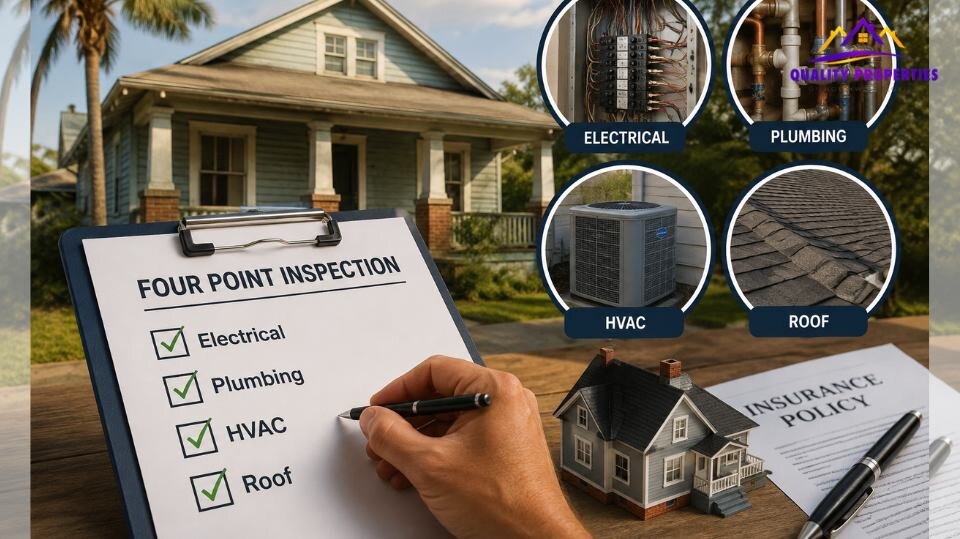
In Florida, older homes undergo strict scrutiny before an insurance company issues a policy. Insurance carriers generally require a four-point inspection for homes that are over fifteen or twenty years old.
The four-point inspection covers four critical building systems.
The inspector examines the electrical system to check for outdated wiring like knob-and-tube or aluminum branch wiring. They check the plumbing system for active leaks or old materials like polybutylene pipes. They inspect the heating and cooling system to verify age and functionality. Finally, they evaluate the roof condition to ensure it has no leaks or severe wear.
If any system fails the four-point inspection, insurance carriers will decline coverage. Without insurance, the buyer cannot secure a mortgage loan. That can cause a pending real estate sale to collapse just days before closing.
The Critical Role of Roof Age in Florida Real Estate
Your roof is the single most important factor determining insurance eligibility and price in Pensacola. Insurance providers look closely at roof age, roof shape, and structural attachments.
Most private insurance carriers in Florida demand that asphalt shingle roofs be under fifteen years old. Many companies prefer roofs under ten years old. If your shingle roof is sixteen years old, private carriers may refuse to write a policy. The buyer might be forced to buy coverage through Citizens Property Insurance Corporation, which is the state insurer of last resort.
Citizens Property Insurance offers coverage when private options are unavailable. However, Citizens policies come with strict rules and potential surcharge risks. Buyers often prefer homes that qualify for standard private insurance options.
Replacing an old roof before selling adds immediate equity and makes your home far more attractive. If replacing the roof is not financially possible, you must factor roof age into your pricing strategy or be open to offering seller credits at closing.
If you want to sell your house fast without fixing an old roof or waiting on insurance approvals, check out Quality Properties of Northwest Florida LLC for a direct cash offer.
Maximizing Wind Mitigation Credits to Lower Buyer Premiums
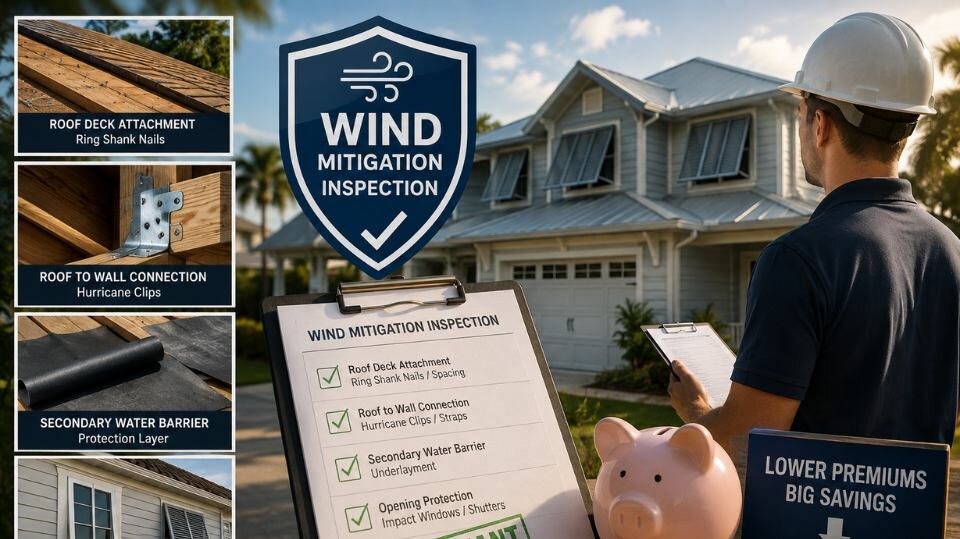
A wind mitigation inspection is a separate report that can save thousands of dollars on annual premiums. Every Pensacola seller should consider ordering a wind mitigation inspection before placing their home on the market.
A certified inspector checks how well your home resists strong storm winds. They look for specific structural safety features.
They check roof deck attachment types like ring shank nails and nail spacing patterns. They examine roof-to-wall connections such as hurricane clips or single wraps. They look for a secondary water barrier under the shingles. They also verify if windows and doors have hurricane impact protection or rated shutters.
Understanding Flood Insurance and Zone Changes in Escambia County
Florida property insurance policies do not cover flood damage from rising water. Flood coverage requires a separate policy through the National Flood Insurance Program managed by FEMA or through private flood insurers.
Pensacola features diverse terrain. Properties along coastal bayous, Escambia Bay, or Pensacola Beach reside in high-risk flood zones like Zone A or Zone AE. Homes on higher ground inland may sit in Zone X, which is considered low to moderate risk.
How High Insurance Costs Affect Home Valuation and Listing Prices
Rising insurance costs in Florida exert downward pressure on home values. When holding costs increase, buyers adjust their offer prices downward to keep total monthly expenses within budget.
When setting your listing price, you cannot rely solely on sales data from two or three years ago. You must look at active market comps and current carrying costs in Escambia County.
If your home has a twenty-year-old roof and high insurance quotes, you may need to price competitively against newly built homes. Modern homes built under updated Florida building codes enjoy lower windstorm insurance rates. Older homes must compete by offering lower purchase prices or upgraded structural features.
Selling a Pensacola Home As Is to a Cash Buyer
Some Pensacola homeowners do not have the time or money to replace a roof or upgrade older electrical panels. Fixing major structural systems before selling can cost tens of thousands of dollars.
For property owners facing tight schedules, inherited houses, or severe deferred maintenance, traditional listings can prove stressful. Cash buyers offer an alternative route that completely bypasses formal mortgage underwriting and insurance inspections.
Cash buyers purchase homes using independent funds. They do not rely on bank financing. That means they do not require four point inspections, wind mitigation reports, or active insurance policies to close the deal. You can sell the property in its present condition without making expensive upgrades or fixing roof issues.
Homeowners who want a simple solution can visit Quality Properties of Northwest Florida LLC to skip repairs and sell directly for cash.
Navigating Mandatory Seller Disclosures in Florida Real Estate
Florida law requires sellers to disclose known material defects that affect property value or safety. This legal obligation covers structural issues, active roof leaks, past water intrusion, and insurance claim history.
When completing your seller disclosure paperwork, be honest about past storm damage and insurance claims. If you filed an insurance claim for roof damage or water repairs, disclose the work completed and present repair invoices.
FAQs
How does roof age affect my ability to sell a home in Florida?
Most private insurance carriers require roofs to be under fifteen years old before writing a policy.
What is a wind mitigation inspection and do I need one?
A wind mitigation inspection evaluates structural features like roof attachments, secondary water barriers, and impact protection.
Can a buyer get a mortgage if a home fails a four-point inspection?
Mortgage lenders require active hazard insurance before releasing loan funds.
What options do I have if I cannot afford pre sale roof repairs?
If you cannot afford pre sale repairs you can offer price concessions to buyers, sell your home as is to a cash buyer, or look into specialty home renovation loans that get paid back out of your closing proceeds.
